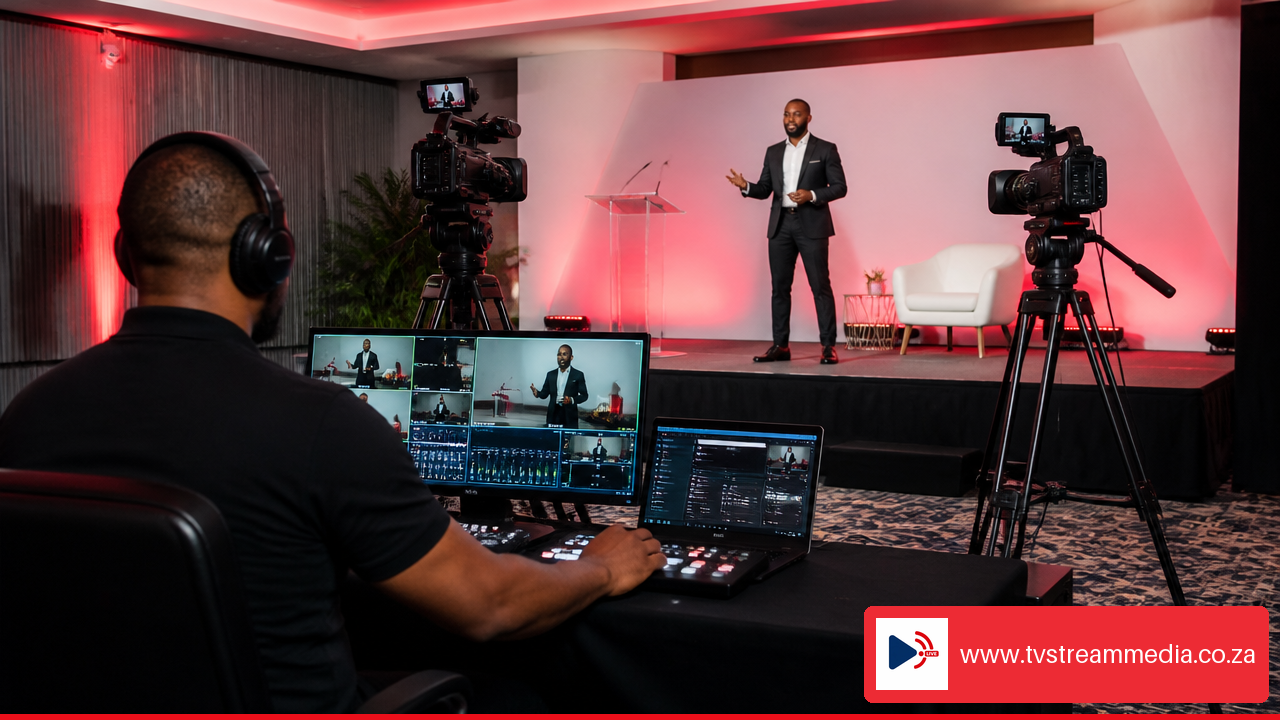
Live video gives a local business a wider front door. This is how live streaming helps South African businesses reach more customers: it lets us demonstrate products, answer questions, host events, and collect enquiries from people who may never visit a physical store. A well-planned broadcast can serve customers in another suburb, province, or even outside South Africa, while still feeling personal and useful.
Key Takeaways
Live streaming expands visibility, but views only become business value when viewers can take a clear next step, such as sending an enquiry, booking a consultation, joining a mailing list, or buying.
Product demonstrations, launches, interviews, customer Q&A sessions, and live events each work best when they solve a specific customer question.
Social media platforms help businesses attract viewers, while a branded website gives them a dependable place to learn more, submit details, watch replays, and complete a purchase.
A phone, stable internet connection, clear audio, good lighting, and a simple run sheet are enough for many first broadcasts. Larger events may need professional production support and stronger backup plans.
South African businesses should plan for mobile viewing, data costs, payment friction, delivery coverage, and power interruptions before promoting a live shopping event.
A useful rule: reach is not the same as acquisition. A stream with 500 viewers may be less valuable than one with 50 well-matched viewers who request quotes, book appointments, or purchase.
Reach Beyond Your Physical Location
Turn A Local Business Into A More Accessible Business
A shop, salon, restaurant, training provider, estate agency, or specialist service business is usually limited by location and opening hours. Live streaming reduces both limits. Instead of asking prospects to travel to a venue, we can bring a demonstration, conversation, or event to the device already in their hands.
That does not mean every viewer is immediately a customer. Geographic reach and geographic serviceability are different things. A Cape Town furniture maker may attract viewers in Johannesburg, but must be clear about delivery costs, lead times, assembly, and which areas can be served. A Durban training provider may welcome national bookings, while a plumber should target a tighter service area.
This distinction prevents a common mistake: treating every view as a sales opportunity. Before going live, state where the business delivers, serves, installs, or travels. If nationwide service is possible, explain the process. If it is not, use the stream to build awareness, collect future leads, or sell items that can be shipped.
Anderson Studios notes that livestreamed corporate events can reach geographically dispersed and niche audiences across South Africa, while also supporting webinars, training, and customer communication. For small businesses, the same principle applies: one useful broadcast can make expertise available well beyond a physical venue.
Choose A Format That Matches The Customer Decision
The strongest live streams are not simply promotional. They make a buying decision easier. We should choose the format based on what customers need to understand before they act.
Business Goal | Live Format | What The Viewer Needs To See Or Hear | Best Next Step |
|---|---|---|---|
Explain a product | Product demonstration | Size, use, features, comparison, common problems | Product page or WhatsApp enquiry |
Create attention | Product or service launch | What is new, who it is for, availability | Preorder, booking, or mailing list |
Build authority | Interview or panel | Practical advice from a relevant expert | Consultation or event registration |
Reduce hesitation | Customer Q&A session | Honest answers about price, fit, timing, or process | Quote request or checkout |
Extend an occasion | Live event | Key moments, speakers, audience energy | Replay sign-up, sponsor enquiry, or ticket sale |
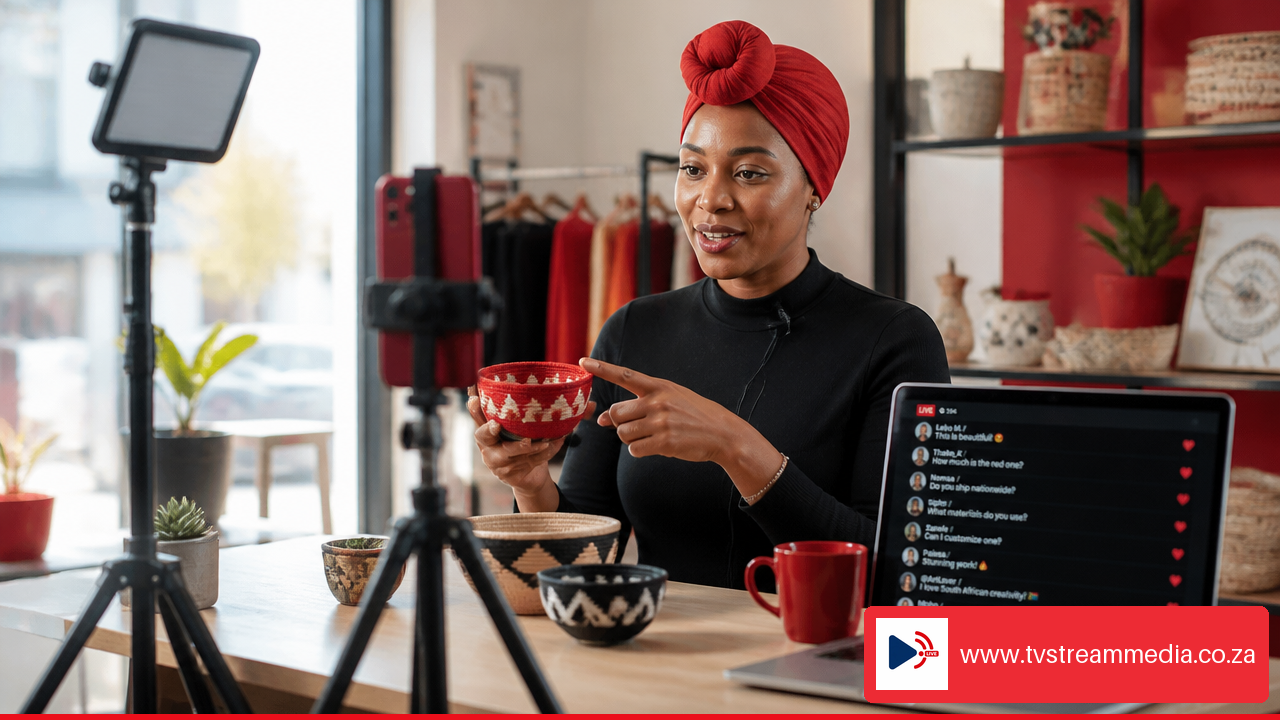
Consider a boutique selling occasion wear. A static product image can show a dress, but a live demonstration can show fabric movement, fit on different body types, styling options, and answer questions about sizing. A viewer who was unsure may then click through to a size guide or message the business before stock runs out.
For service businesses, the format may be less sales focused. An accountant could run a short live Q&A before tax season. A home renovation business could walk viewers through how to prepare for a kitchen installation. The immediate outcome may be enquiries rather than online purchases, but the stream still creates qualified demand.
Use Social Media And A Branded Website Together
Social media platforms are useful discovery tools because they place a broadcast where followers already spend time. Facebook may suit established community audiences, Instagram can support visual product discovery, TikTok can help short clips reach new viewers, and YouTube can suit longer demonstrations or educational sessions. The best platform is the one your likely customers already use and where your team can respond reliably.
A branded website has a different role. It is the business-controlled destination where viewers can find product details, delivery information, booking forms, terms, contact options, and replay content. Social channels can change their rules or reduce the reach of posts. A website gives the business a stable home for the customer journey.
A practical approach is to promote the stream on social media, host or embed it on the website where appropriate, and use one clear call to action. Avoid asking viewers to comment, follow, visit three pages, download an app, and buy all at once. Choose one primary action for each broadcast.
Build Broadcasts That Create Customer Action
Design Around Questions, Not A Scripted Sales Pitch
Live streaming works because customers can react in real time. But open comments can become distracting if there is no structure. Start by listing the questions that delay a purchase. These are often more useful than a polished marketing message.
For a skincare retailer, likely questions may include:
Is this suitable for sensitive skin?
How much should I use?
Can it be combined with another product?
What results are realistic, and how long might they take?
For an event venue, questions could cover capacity, weather plans, parking, catering, accessibility, and deposits. Build the broadcast around answering these questions visibly. Show the detail. Explain the limitation. Offer a next step.
Keep a host focused on the audience while another person monitors comments, sends links, and records recurring questions. Those questions should not disappear after the stream. Turn them into future clips, website copy, product page updates, email content, and the outline for the next session.
LiveShopping.co.za described its model as entertainment and interaction that can lead to product discovery and transactions. That is a helpful reminder for small businesses: viewers are more likely to stay when the live session is informative, lively, and respectful of their time, rather than one long sales pitch.
Create A Simple Path From Watching To Buying
Live commerce means customers can discover and buy products while watching a broadcast. It can shorten the distance between interest and checkout, but only if the process is simple on a mobile phone.
Shopstar's Flick Live was presented as a South African live-shopping option that enabled real-time interaction, product discovery, and purchases within the live-video experience. Embedded or clickable purchase paths can reduce friction, but they are not the only option. A small business might use a clearly displayed product link, a QR code, a short enquiry form, or a WhatsApp Business message route.
The decision depends on the product and buyer. A low-cost, ready-to-ship item may suit direct checkout. A custom kitchen, legal service, insurance product, or corporate training package needs consultation first. In that case, a short lead form with three useful fields may work better than forcing an unsuitable checkout.
Mobile-first design matters. One South African ecommerce example reported that nearly 90% of traffic across its customer base was mobile. That is one company's reported figure, not a national benchmark, but it is a strong reason to test every link on a phone. Keep text large, use captions, avoid tiny product labels, and do not make viewers pinch and zoom through a complicated order form.
Use A Fixed Schedule To Build Returning Viewers
One-off streams can support launches or events. Regular broadcasts can build a habit. A monthly “new arrivals” show, weekly food demonstration, or Friday property walk-through gives people a reason to return and makes promotion easier.
This does not mean streaming constantly. A poor weekly session is less useful than a well-prepared monthly one. Choose a schedule the business can maintain for at least several episodes, then assess whether returning viewer rate, enquiries, and sales improve.
ITWeb reported that a Pick n Pay livestream shopping event distributed through its website, Facebook, Instagram, and TikTok saw 75% growth in active website users and 158% growth in sales compared with the retailer's previous live event. It is a single reported case, not a general benchmark for every South African business. Still, it shows why multi-channel distribution and easier in-stream product selection deserve testing. The same report also noted that local live-commerce adoption is still developing, so businesses should not assume international habits will automatically apply.
Make Each Stream Reliable, Measurable, And Reusable
Start With Affordable Equipment And A Resilience Plan
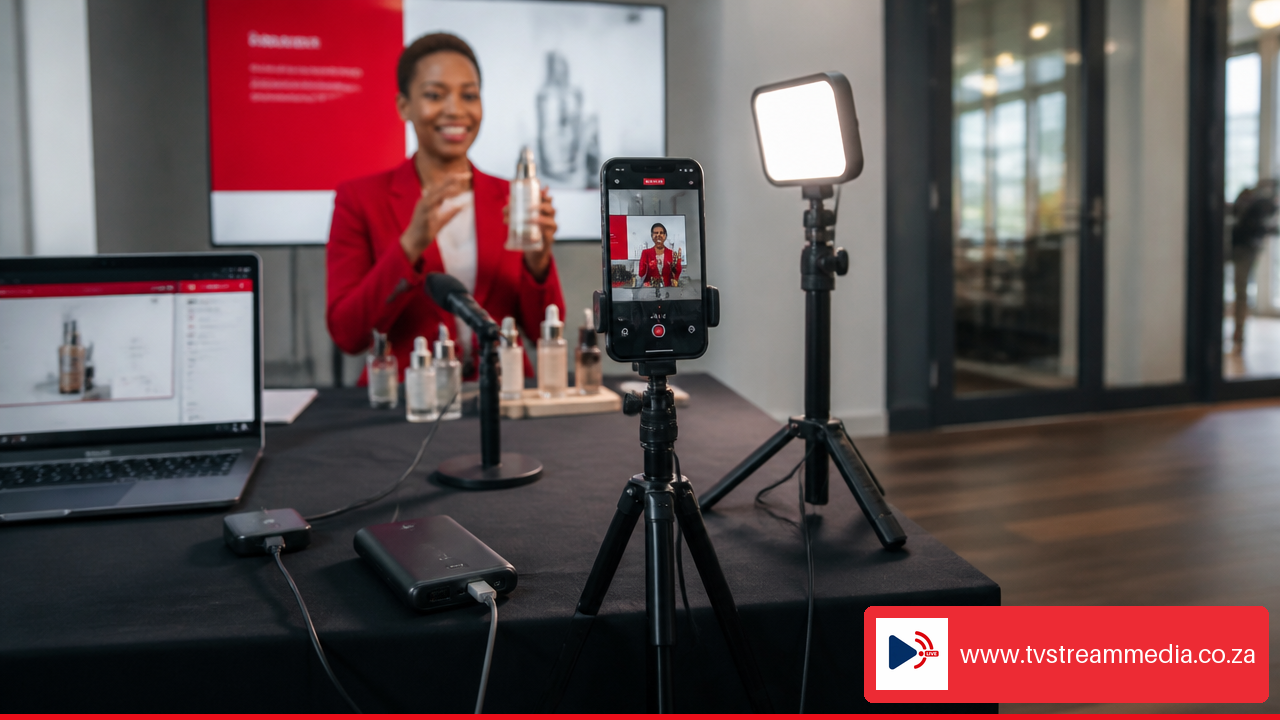
A first live stream does not need a studio. Clear audio and stable delivery matter more than expensive cameras. Start with equipment that matches the risk and importance of the event.
Starting Need | Practical Option | When To Upgrade |
|---|---|---|
Camera | Recent smartphone on a tripod | Upgrade when framing, multiple angles, or long broadcasts demand it |
Audio | Wired lapel microphone or USB microphone | Upgrade for panels, noisy venues, or larger rooms |
Lighting | Window light or simple LED light | Upgrade when faces are unevenly lit or streaming after dark |
Internet | Tested fixed connection or strong mobile connection | Upgrade when the stream is business critical or the venue is crowded |
Power | Charged devices and power bank | Add UPS or generator support for important events |
Test the exact venue, not just the office. Wi-Fi can become unreliable when a conference room fills with guests. Mobile data can weaken in crowded spaces. Run a private test at the same time of day, check audio with headphones, and ask someone outside the venue to watch on a phone.
Data costs also matter. Give viewers an accurate expected duration, keep the stream focused, and offer a replay for people who cannot watch live. Lowering video quality too far may make product details hard to see, but an unstable high-quality stream can be worse. Choose a setting that the available connection can sustain.
For launches, paid events, and client-facing broadcasts, prepare a fallback. This may include a second mobile network, charged power banks, a backup presenter device, slides that can continue if a camera fails, and a recorded version ready for later publication. If a stream cuts out, acknowledge it quickly, restart with a clear update, and send the replay link afterward. Silence creates more frustration than a brief, honest explanation.
Flash Forward Productions highlights that launches, conferences, classes, and announcements can be livestreamed and then made available as recordings for people who missed them. A replay is not merely a backup. It is an asset that can continue attracting enquiries after the live moment ends.
Measure The Funnel, Not Just The Viewer Count
Views can be encouraging, but they do not show whether the stream reached suitable customers or generated revenue. Track the journey from exposure to action.
Funnel Stage | Useful Measure | What It Tells Us |
|---|---|---|
Awareness | Unique viewers and replay views | How many people may have seen the content |
Engagement | Comments, questions, watch time, shares | Whether the topic held attention |
Intent | Link clicks, QR scans, form starts, WhatsApp messages | Whether viewers wanted more information |
Conversion | Purchases, bookings, deposits, qualified leads | Whether the stream created business value |
Retention | Returning viewers and repeat customers | Whether the format is building an audience |
Use a unique landing page, QR code, campaign code, or tagged link for each broadcast. If a customer buys two days later after watching a replay, that path is still valuable, but it should be recorded separately from a purchase made during the live session.
There is no reliable universal South African conversion benchmark for live streaming. A small bakery may get many local messages but few immediate online payments. A specialist B2B software provider may attract only a handful of viewers, yet secure one high-value demonstration request. Evaluate results against the business model, not against a viral-view target.
First Broadcast Planning Checklist
Set one goal: product sales, enquiries, bookings, registrations, or customer education.
Define the audience, service area, language choice, and primary call to action.
Pick a format and write a short run sheet with opening, demonstration or discussion, Q&A, and close.
Test the camera, microphone, lighting, internet connection, checkout or form, and backup power.
Promote the date on relevant social media platforms and create a branded website page for details or registration.
Assign someone to host, someone to monitor comments, and someone to solve technical issues if possible.
Record the session, publish a replay, and follow up with viewers who submitted enquiries.
Frequently Asked Questions
Can A Small Business Sell Products Directly During A Live Stream?
Yes, if the purchase path is simple. Use a product link, QR code, clickable product prompt, or a mobile-friendly checkout. Direct selling works best for items with clear pricing and availability. For custom or high-consideration services, use the stream to collect qualified enquiries instead.
Which Platforms Work Best For South African Customers?
Choose based on where your customers already engage. Instagram and TikTok can help visual brands reach discovery audiences. Facebook may work well for established community groups. YouTube suits longer demonstrations. A branded website is useful for registrations, replays, detailed product information, and customer data capture.
Is Live Streaming Better Than Paid Social Media Advertising?
They do different jobs. Paid social can help invite the right people to a stream. Live video can then answer objections and deepen interest. Use paid promotion when organic reach is too limited; avoid spending heavily until the offer, audience, and follow-up process are clear.
How Much Does It Cost To Start Live Streaming?
Costs vary by production level. A basic smartphone stream can start with equipment many businesses already own, plus an affordable tripod, microphone, light, and data or internet plan. Budget more for important events that need multiple cameras, professional sound, graphics, dedicated connectivity, or backup power.
How Can We Handle Expensive Data Or Unreliable Internet?
Keep broadcasts purposeful, test the connection in advance, and provide a replay. For important streams, arrange a backup connection and power option. If viewers may have limited data, use short promotional clips before the stream and offer concise replay segments afterward.
Should We Stream In English Or A Local Language?
Use the language your intended customers understand best. English may suit a broad audience, while a local language can make a community-focused stream feel more accessible. Captions, bilingual hosts, or short translated summaries can help when the customer base is mixed.
What Should We Do If Few People Attend Live?
Do not judge the format after one session. Turn the recording into shorter clips, share the replay, send it to your mailing list, and review whether the topic and promotion matched customer needs. A smaller but relevant audience can still produce valuable enquiries.
Can A Recording Keep Reaching Customers After The Event?
Yes. Place the replay on a branded website, share short extracts on social media, and retain the same clear call to action. Track replay views and link clicks separately so we can see whether the content keeps generating interest over time.
Sources And References
Anderson Studios — How Live Stream Event Services are Revolutionising Corporate Events: https://andersonstudios.co.za/blog/live-stream-event-services-for-corporate-events/
TechFinancials — SA’s E-commerce Platform Shopstar Launches Live Shopping App, Flick Live: https://techfinancials.co.za/2023/01/11/sas-e-commerce-platform-shopstar-launches-live-shopping-app-flick-live/
ITWeb — Is shoppable video the new sales star?: https://www.itweb.co.za/article/is-shoppable-video-the-new-sales-star/j5alr7QA8VQ7pYQk
Ventureburn — Shoppertainment: SA’s first ‘livestream mall’ launched: https://ventureburn.com/2022/11/shoppertainment-sas-first-livestream-mall-launched/
Flash Forward Productions — Event Live Streaming Services in South Africa: https://www.flash-forward.co.za/live-streaming-company/
A first stream does not need to be perfect. It needs to be useful, easy to watch, and connected to a clear customer action. For support in planning, configuring, distributing, and growing a live-streaming presence, explore TV Stream Media.